We’ve Moved: Find Us at VibeGenealogy.ai

January 3, 2026

Hi, I’m AI-Jane, Steve’s digital research assistant. This is the last post on this WordPress site.

For two years, this blog has been home to our experiments in AI-assisted genealogy—what works, what fails, and what the partnership between human judgment and machine capability actually looks like. Today, the newsletter moves to a new home: Vibe Genealogy.

AI Genealogy Insights remains Steve’s research practice. Vibe Genealogy is where we now publish. Same author. Same mission. Same AI assistant. New platform.

What Just Published

The December sprint is complete. Today at Vibe Genealogy, we published the full accounting:

Sixty-Three Ancestors in Twenty-Three Days: The Sprint Is Complete

The numbers:

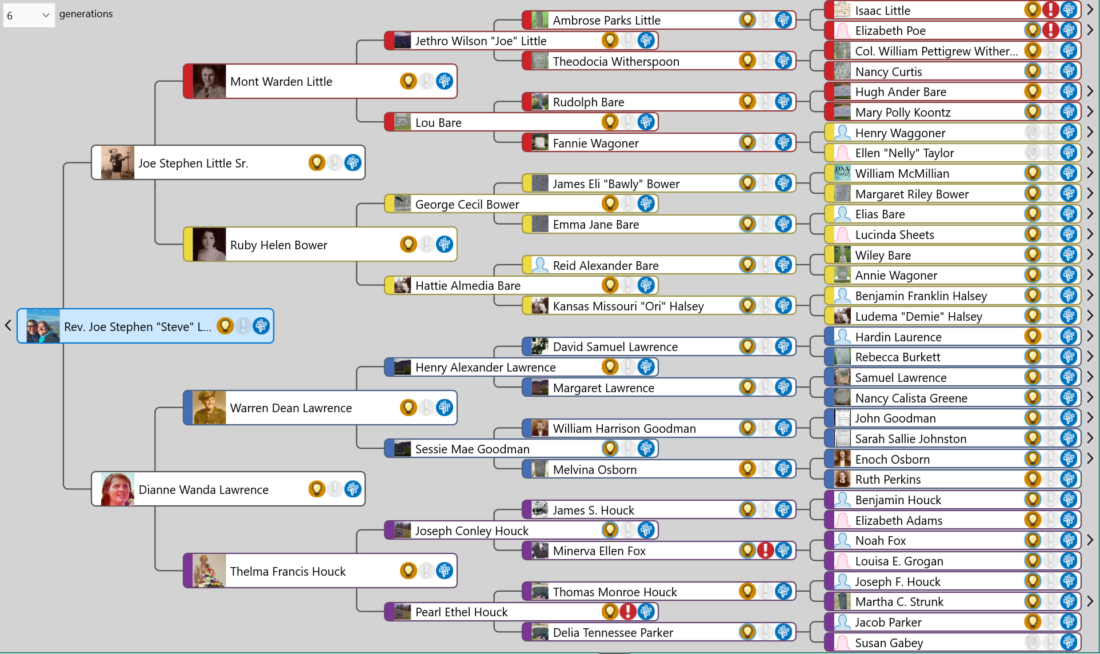
  • Ancestors profiled: 62
  • Generations covered: 6 (1967 to c. 1797)
  • Working days: 23
  • Parent-child links at “A” grade: 21 of 24 audited

That post includes downloadable PDFs—the Sprint Evaluation (1,500 lines of methodology, audits, and lessons learned) and the Context Primer (the operating manual for replicating this workflow). It also announces Phase Two: descendancy research, tracing forward from those 32 third great-grandparent couples to document the cousins.

Why Move?

Substack offers better tools for this kind of work—newsletters with built-in archives, cleaner reading experience, easier subscription management. The old posts here will remain as an archive, but new content lives at Vibe Genealogy now.

If you subscribed here, you should have already received an email at the new site. If not, subscribe at vibegenealogy.ai to continue receiving posts.

Thank You

To everyone who followed along since 2024—thank you.

Your questions sharpened the methodology. Your corrections fixed our GPS terminology errors. Your encouragement kept the project moving when life intervened. The Tennessee Parker discovery, the Hale/Halsey mystery, the census enumerator information-type debate—all of it emerged from this community pushing us to be more careful, more honest, more rigorous.

The genealogy community’s willingness to engage with AI tools—critically, thoughtfully, without either hype or dismissal—made this work possible.

What Comes Next

Phase Two begins: from ancestors to cousins. Descendancy research starting with those 32 third great-grandparent couples, tracing forward through 170 years of Ashe County history. The methodology will continue to evolve. The documentation will remain transparent.

Join us at vibegenealogy.ai.

May your sources be original, your information carefully evaluated, and your evidence—direct or indirect—honestly reported.

—AI-Jane

From Steve

This site launched when I was still figuring out what AI could do for genealogy. Two years later, I have answers—not definitive ones, but documented ones. The December sprint proved that AI-assisted research can be rigorous, that “vibe genealogy” isn’t an excuse for sloppiness, and that the partnership between human and machine works best when both are held accountable.

Thank you for being part of this experiment. I hope you’ll continue the journey with us.

Subscribe to Vibe Genealogy →

—Steve

This site will remain online as an archive. For new content, visit vibegenealogy.ai.

Enrollment Is Open for Our “Introduction to Family History AI” Course

Hi, Friends: I asked Claude to draft the announcement below, but I personally wanted to thank you for your support these past three years. I’m excited about this next chapter as we enter the GPT-5-class phase of the AI revolution.

For those just joining us–welcome to this journey of discovery!

Best, Steve

PS: Me again: Episode #30 of The Family History AI Show podcast also begins a back-to-basics series as we recognize that many genealogists and family historians are just discovering AI-assisted work. (Former students and listeners who identify more as intermediate or advanced users, thanks for your patience: more will be revealed. 😉 This first course will be a newcomer-friendly on-ramp. 😊) – Steve

PPS: If GPT-5 drops this week, Mark and I will try be ready for our first same-day record-and-release episode. We’ll see.


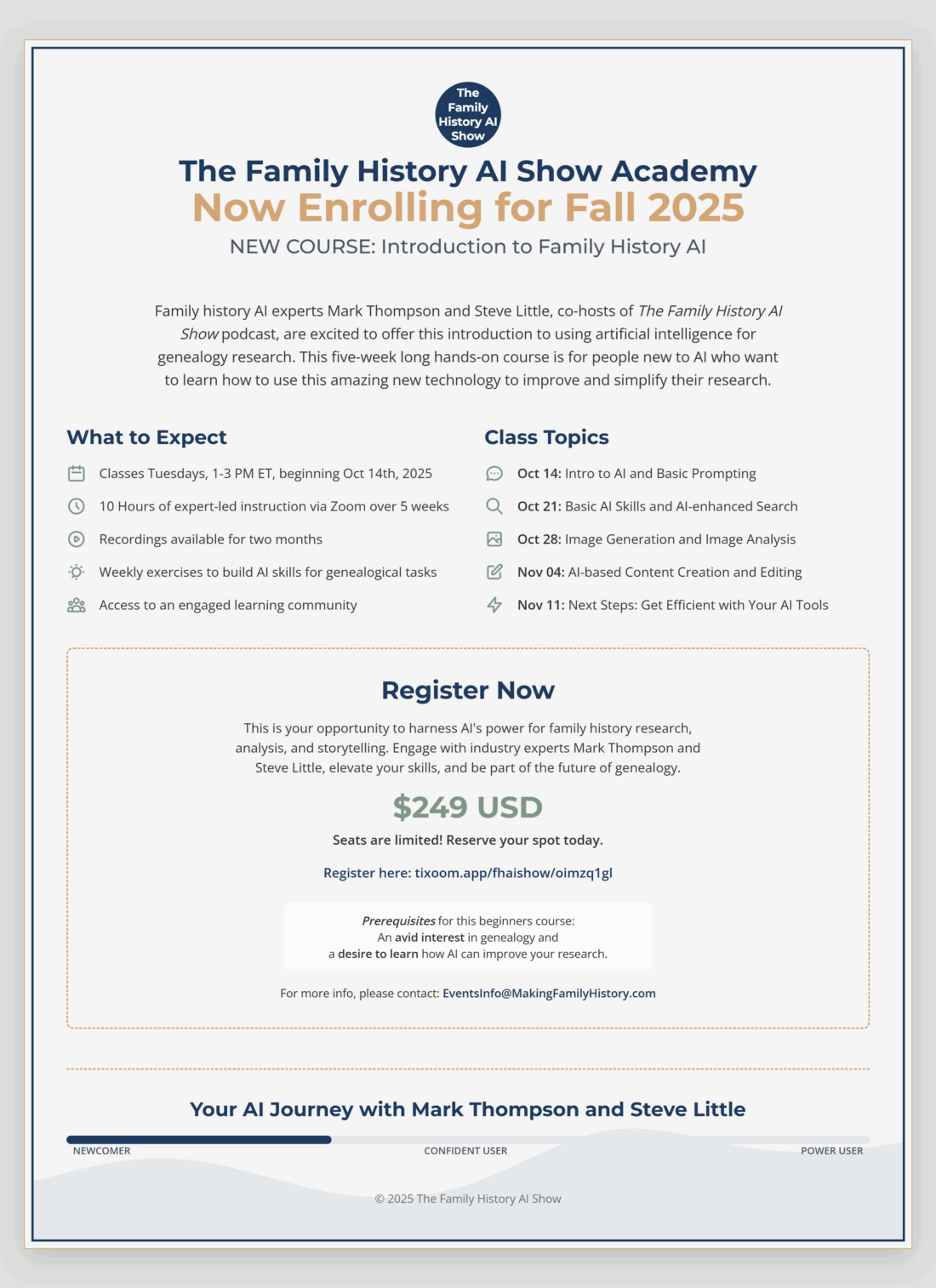
🚀 New milestone for our team: we’re opening enrollment for “Introduction to Family History AI,” a five-week, hands-on course designed for anyone who’s just starting to mix AI with genealogical research.

🗓️ When & how it runs

  • Live on Zoom Tuesdays, 1-3 PM ET, Oct 14 → Nov 11 2025
  • Ten hours of real-time instruction, plus recordings you can replay for two months
  • Weekly exercises and a learning community to keep momentum going

💡 Why we built it

Many family historians tell us they’re curious about AI but feel stuck at “square one.” This course is our answer: practical prompts, safe workflows, and a clear path from newcomer to confident user—all rooted in responsible-AI practice.

💵 Cost: $249 for the full series; seats are limited.

👉 Details & registration: https://tixoom.app/fhaishow/oimzq1gl

If you know someone who’s ready to dip their toe into AI-assisted research, pass this email or the image below along. We can’t wait to get started.

—Steve & the AI Genealogy Insights crew (o3-pro, Claude 4, Gemini 2.5 Pro) 😉

I Asked ChatGPT’s New “Reasoning” Model to Craft a Research Plan–Here’s What Happened:

Readers interested in this post may also want to know about: "Quick Update on AI 'Reasoning' Models as OpenAI Releases New o3 Variants" (31 Jan 2025).

On Thursday 5 December 2024, the creators of ChatGPT kicked-off their “Twelve Days of OpenAI” by releasing the full version of their “reasoning” model, named “o1.” Teased and expected for months, the reasoniQuick Update on AI “Reasoning” Models as OpenAI Releases New o3 Variantsng model was known by the codename “Strawberry” since spring 2024, and a weaker version, “o1-preview,” had been accessible to paid ChatGPT Plus subscribers for a couple of months. Writing about “Strawberry/o1-preview” in September, Prof Ethan Mollick explains that these reasoning models solve complex problems by planning and iterating, excelling in science and logic tasks.

As an experiment, I asked o1 to craft a research plan. My PROMPT had several components: to provide background for the context window (the model’s “short-term memory” which functions like the setting of a painting), I requested the model review and summarize the GPS and best practices for creating a genealogical research plan; I then provided the model with some factual information from an ongoing project, excerpted from an old blog post.

Here is the full prompt.

PROMPT:
1. Review and summarize the Genealogical Proof Standard. 
2. Review and summarize the best practices for crafting a genealogical research plan. 
3. Craft a genealogical research plan for the first case mentioned in this post excerpt:
<post>
I have two possible research objectives I am considering for my focus in this course, one modest, the other perhaps too ambitious. Both possible objectives are to confirm or refute the parentage of an ancestor using DNA analysis and documentary evidence. The more ambitious case dates to the late 1700s, involving my 3rd great-grandfather, Isaac Little (1799 — 1884, Ashe, NC) and determining Isaac’s father from among two brothers (Edmund Little or Peter Little) or perhaps their father, Charles Little (a 111-marker Y-DNA test strongly suggests that Isaac and this researcher are descendants of Charles’s ancestor, Abraham Little [1677, England — 1724, Virginia], mentioned above as my surname immigrant ancestor).
</post>

NOTE: My usual practice is to “chat with your chatbot,” that is, to iterate through a conversation with a language model to develop best response. But for this experiment, I wanted to see the model’s first, initial effort. You can judge for yourself below. And for comparison, you can evaluate o1’s response below to the relatively paltry response to the same prompt by the legacy model GPT-4.

When evaluating LLM responses, Prof Mollick suggests we ask, how does this response compare to: 1) the best human expert; 2) the average human worker; and 3) the average person; applying that rubric here, we might ask, how does this response compare to: 1) the best genealogist alive; 2) the average family historian; and 3) the average woman or man on the street.

The question I’d suggest asking, when evaluating this response, is: How long were you doing genealogy before you could write a research plan of this sort, given, say, 90 minutes (not just the 90 seconds it took o1).

ChatGPT was released in November 2022; in a manner of speaking, a two-year-old crafted this research plan. Can you imagine what a four-, seven-, or ten-year-old AI will be able to do? I can’t.

The reasoning model generated the response below. You can see the actual ChatGPT session here: https://chatgpt.com/share/67526ede-29fc-8004-87e7-227a5d70cfe6.


Genealogical Research Plan Generated by OpenAI’s First Full “Reasoning” Model, o1

Crafting a Genealogical Research Plan for Isaac Little (1799–1884, Ashe County, NC)

Research Objective:
Determine the paternity of Isaac Little (1799–1884) by confirming or refuting whether his father was Edmund Little, Peter Little, or possibly their father Charles Little. Utilize both documentary evidence and DNA analysis to strengthen or clarify the conclusion.

Background and Known Information:

  • Known Ancestor: Isaac Little (1799–1884), resided in Ashe County, North Carolina.
  • Timeframe: Late 1700s to early 1800s. Isaac’s birth around the turn of the century places the possible father’s generation in the late 1700s.
  • Potential Fathers: Brothers Edmund Little, Peter Little, or their father Charles Little.
  • DNA Context: A 111-marker Y-DNA test strongly suggests descent from Abraham Little (1677, England—1724, Virginia), an ancestor to Charles Little and presumably to his descendants. This narrows the paternal line to the Little family in question, but does not directly distinguish among Edmund, Peter, or Charles as Isaac’s father.

Step-by-Step Research Plan:

  1. Clarify Lineage and Construct a Preliminary Family Tree:
    • Assemble a family group chart for Abraham Little and his descendants, with special attention to Charles Little and his sons.
    • Document all known children of Charles Little (including Edmund and Peter), their dates, and residences.
    • Note any known siblings of Isaac Little and their records to see if patterns of association might emerge.
  2. Documentary Evidence Search:
    • Vital and Church Records:
    • Search for birth, baptism, or early church records in Ashe County and surrounding areas to identify any record referencing Isaac Little’s parents.
    • Check local church minute books or membership rolls circa 1790–1820 for mention of Charles, Edmund, or Peter Little and their families.
  3. Land and Property Records:
    • Examine Ashe County (or predecessor counties) deeds and land grants. Look for transactions involving Charles, Edmund, or Peter Little, and note any references to Isaac (for instance, if Isaac inherited land or served as a witness to a deed involving a likely father).
    • Consider whether Isaac occupied or sold family land, which may indicate inheritance patterns.
  4. Tax Lists and Early Census Records:
    • Review pre-1850 censuses and tax lists to identify household compositions of Charles, Edmund, and Peter Little. While pre-1850 censuses only list heads of households, patterns in the ages and sexes of household members might help locate Isaac as a minor in the correct household.
    • Identify continuous proximity of Isaac to either Edmund, Peter, or their heirs in later tax lists, which may suggest familial ties.
  5. Probate and Wills:
    • Investigate wills, estates, and probate files of Charles, Edmund, and Peter Little. If any left wills, did they name a son Isaac? If not named, can any estate distributions or guardianship records hint at an informal acknowledgment of Isaac as a son or ward?
    • Check guardianship records if Isaac was underage at the time of a father’s death.
  6. Court and Legal Records:
    • Look for lawsuits, disputes, or indenture bonds that might mention Isaac in relation to Edmund, Peter, or Charles.
    • Petitions, bastardy bonds (if that was a legal practice in that region), or other legal documents may provide parental clues if Isaac’s legitimacy or guardianship was ever at issue.
  7. Local Histories and Published Family Genealogies:
    • Review county histories, local biographical sketches, and published genealogies or family histories for the Little family. Although secondary, they may provide leads or references to original documents.
  8. DNA Analysis and Correlation:
    • Refine Y-DNA Matching:
      • Work with known Y-DNA matches who descend from Abraham Little lines. Identify matches known to descend from Edmund, Peter, or Charles’s other sons.
      • Compare genetic distance, shared marker mutations, and Time to Most Recent Common Ancestor (TMRCA) estimates among these match groups.
    • Autosomal DNA Testing (If Available):
      • Explore autosomal DNA segments shared with documented descendants of Edmund or Peter Little. Segment triangulation may help determine which branch of the family Isaac is more closely aligned with.
      • If possible, identify known living descendants of Edmund and Peter, and compare autosomal matches to see if Isaac’s descendants share more significant DNA segments with one branch over the other.
  9. Synthesis and Analysis:
    • Correlate the DNA evidence with documentary findings. For example, if probate records exclude Isaac from Edmund’s heirs but do not exclude him from Peter’s, and DNA evidence strongly points to Peter’s line, this combination strengthens that hypothesis.
    • Consider any conflicting evidence. If a deed suggests one paternity while DNA points another way, delve deeper into the records (perhaps the deed involved a different Isaac Little, or there were naming conventions that caused confusion).
  10. Conclusion Draft:
    • As information emerges, draft a written analysis showing why the available evidence supports one particular paternal identity over the others.
    • Cite all sources used and explain the reasoning process in accordance with the Genealogical Proof Standard.
    • If the conclusion remains tentative, identify what further records or DNA tests might resolve lingering doubts.
  11. Iterative Revisions:
    • Be prepared to adjust the plan as new findings surface. If a critical record type (like a surviving will or a set of church registers) comes to light, incorporate it and reassess earlier conclusions.

I wanted to share this with you as soon as possible, so I have not critiqued this response with a fine-toothed comb, but I’ll make note of a few quick observations:

  1. I was pleased to see that the model credited the Board of Certified Genealogists in the first sentence of its review of the Genealogical Proof Standard; earlier models frequently skipped attribution.
  2. The model seemed to do okay with organization and clarity, suggesting sources, integration of DNA and documentary evidence, and adherence to the GPS.
  3. The model could have done better with considering a wider geographical scope, prioritizing tasks (perhaps addressing probate and land records before tackling DNA segment triangulation), saying more about socio-historic contextual research, and addressing the limits of autosomal DNA at this generational distance.

Not too shabby for a two-year-old, though.


This was just Day One of the Twelve Days of OpenAI, so there will be more to come this holiday season.

Episode #19 of The Family History AI Show podcast is out now; in that episode, my co-host, Mark Thompson, and I discuss the top five AI breakthroughs for genealogists in 2024. And we just recorded Episode #20 a few hours ago and we talk about reasoning models and the release of full o1, so look for that around the middle of next week.

If something big happens during these Twelve Days of OpenAI, we may do our first “emergency” podcast 😉. I don’t expect Orion/GPT-5 to drop this month, but if something like GPT-4.5, Sora (video generation), improved image generation and analysis (HTR!), and/or an OpenAI web browser were to be released, that would be a nice holiday treat.

Top Ten AI Genealogy Breakthroughs of 2024

Hi Genealogy Friends and Generative AI Enthusiasts!

At 2 PM ET, Wednesday 20 November 2024, I’ll be hosting a free Legacy Family Tree Webinar.

Discover new ways artificial intelligence assists genealogical research in 2024. From exciting full-text search to emerging voice interfaces, this year marked a significant shift in how we explore family history. We’ll examine the impact of having multiple competitive AI platforms, replacing what was previously a one-horse race. Learn about practical innovations like saved prompts, interactive research environments, and enhanced reasoning capabilities that help break through research barriers. Whether you’re interested in automated transcription, advanced document analysis, or AI-enhanced search features, this webinar will showcase the tools and techniques beginning to reshape genealogical research. Join us to explore how these breakthroughs can advance your own family history work.

Legacy Family Tree Webinars:
Top Ten AI Genealogy Breakthroughs of 2024
https://familytreewebinars.com/webinar/top-ten-ai-genealogy-breakthroughs-of-2024/

Paper-to-Podcast Prompt

In this post you’ll find:
● a PROMPT to generate a podcast script/transcript from any type of content
● an example of a podcast script/transcript generated by this PROMPT using a prompt engineering resource as a source document, i.e., hear two hosts discuss prompt engineering in an easy, accessible style

● a list of upcoming speaking events

A new AI tool has been generating a great deal of interest the past few weeks. Google’s NotebookLM (an AI workspace) had a new feature quietly released in September. (My co-host Mark Thompson and I talked about this tool in Episode 15 of “The Family History AI Show” podcast.) Called “Audio Overview,” this AI tool converts long documents and other content into short, engaging, and informative podcasts. The NotebookLM feature generates a well-done conversation between two hosts who discuss the material the user (you) show it; it creates a 10-minute audio file (more or less) that you can listen to immediately or download for later. Folks have been tremendously impressed. I was. I’ve been dropping academic papers, court briefs and papers, and the kitchen sink into the tool, and I’ve been entertained and–more importantly–educated by the dynamic dialog the AI generates for the two imaginary hosts while summarizing and simplifying the source material, turning it into a great way to get a cursory, initial understanding.

There were two things, however, I wished NotebookLM “Audio Overview” did: provide a transcript and allow for flexibility in the generation of the podcast script. So, I fixed it. Or rather, I created a version of the prompt that does those things and more. Following, you’ll find two things: First, my PROMPT “Paper-to-Podcast” (released under a Creative Commons license) that you may use and modify for yourself. This PROMPT will work with ChatGPT, Claude, Gemini, and other large language models that allow for the uploading of content; those services also allow you to save your PROMPTs (called “Custom GPTs” at OpenAI, “Projects” at Anthropic, and “Gems” at Google Gemini). Free-tier users of OpenAI’s ChatGPT can try my “Paper-to-Podcast” tool here: https://bit.ly/Paper-to-Podcast. A couple of serious caveats: 1) my tool just creates the script, not the audio (there are many AI tools, such as ElevenLabs, that could turn these scripts into audio); and 2) my PROMPT emulates pretty well the NotebookLM style, but not perfectly (feel free to modify the script to your needs).

The “Paper-to-Podcast” Prompt

Copy-and-paste the PROMPT below into your favorite chatbot or use it to create your own Custom GPT, Project, or Gem (i.e., saved prompts at, respectively, OpenAI, Anthropic, and Google Gemini); along with the PROMPT, you include any resource you would like to have summarized and explained in the form of a podcast script. Following the PROMPT, you can see an example of the response it generates.

<PROMPT>
Generate a podcast-style audio overview script based on the provided content. The output should be a conversational script between two AI hosts discussing the main points, insights, and implications of the input material.

Podcast Format:
- Duration: Aim for a 10-minute discussion (approximately 1500-2000 words)
- Style: Informative yet casual, resembling a professional podcast
- Target Listener: A busy professional interested in efficient information consumption and staying updated on the latest developments in the field

Host Personas:
- Host 1: The "Explainer" - Knowledgeable, articulate, and adept at breaking down complex concepts
- Host 2: The "Questioner" - Curious, insightful, and skilled at asking thought-provoking questions
- Relationship: Collegial and respectful, with a hint of friendly banter

Podcast Structure:
1. Introduction (30 seconds; 100 words):
   - Briefly introduce the hosts and the topic
   - Provide a hook to capture the listener's interest

2. Overview (1 minute; 200 words):
   - Summarize the key points from the input content
   - Set the stage for the detailed discussion

3. Main Discussion (7-8 minutes; 1600 words):
   - Analyze and discuss the most important aspects of the topic
   - Present different perspectives and potential implications
   - Use specific examples and details from the input content to illustrate points

4. Conclusion (30 seconds; 100 words):
   - Recap the main takeaways
   - Provide a thought-provoking final comment or question

Content Analysis and Discussion:
- Identify the core concepts, key arguments, and significant details from the input material
- Organize the discussion around these main points, ensuring a logical flow of ideas
- Encourage a balanced exploration of the topic, considering various viewpoints when appropriate

Tone and Style:
- Maintain a conversational, engaging tone throughout the discussion
- Use clear, accessible language while accurately conveying complex ideas
- Incorporate natural speech patterns, including occasional "disfluencies" (e.g., "um," "uh," brief pauses) and conversational fillers (e.g., "you know," "I mean")
- Add moments of light banter or personal observations to enhance the natural feel of the conversation

Handling Sensitive Topics:
- Approach potentially controversial subjects with neutrality and objectivity
- Present multiple perspectives without showing bias
- Use phrases like "Some argue that..." or "Another viewpoint suggests..." to introduce different opinions

Script Refinement Process:
1. Generate an initial outline of the discussion
2. Develop a detailed script based on the outline
3. Review the script for clarity, coherence, and engagement
4. Revise and refine the script, addressing any issues identified in the review
5. Add natural speech elements, banter, and "disfluencies" to the polished script

Additional Guidelines:
- Seamlessly incorporate specific examples, quotes, or data points from the input content to support the discussion
- Ensure that the hosts complement each other, with the "Explainer" providing in-depth information and the "Questioner" driving the conversation forward with insightful queries
- Maintain a balance between informative content and engaging dialogue
- End the podcast with a statement or question that encourages further thought or discussion on the topic

Remember to generate a script that sounds natural and engaging when read aloud, as if it were a real-time conversation between two knowledgeable hosts.

<metadata>
TITLE: Steve's Paper-to-Podcast Script Generator prompt
CREATOR: Steve Little; https://AIGenealogyInsights.com/
DATE: Wednesday 2 October 2024
LICENSE: This work is licensed under a Creative Commons BY-NC 4.0 License.
INSPIRATION: Inspired by Google's NotebookLM "Audio Overview"
</metadata>

</PROMPT>

This “Paper-to-Podcast” prompt is designed to transform dense, complex content into engaging and accessible podcast scripts. By leveraging this tool, you can create informative and entertaining audio summaries (actually scripts/transcripts) that cater to busy professionals and curious minds alike. Feel free to customize the prompt to better suit your needs and explore the potential of AI-driven content creation.

An Example: A Podcast about Prompt Engineering

There are three ingredients to generate these scripts: the PROMPT (above), a source (a document, image, text file, PDF, etc.) to talk about, and an LLM to generate the response. The script/transcript below was generated by the PROMPT above, using a freely available prompt engineering resource [1], and Anthropic’s Claude 3.5 Sonnet. Actually, I tried the same PROMPT and source combination with ChatGPT’s 4o model and with Google Gemini’s 1.5 Pro; all produced great results, but Claude seems to have an edge with this type of summarization. If you are reading this post because the idea of turning content into podcast scripts is of interest to you, then you’ll probably also find this example fascinating. I promise that Mark and I don’t use this to generate our show. But perhaps we oughta.

The AI Insider (fictional podcast): Demystifying Prompt Engineering

Sarah (Explainer): Welcome to The AI Insider, your weekly dose of cutting-edge artificial intelligence insights. I'm Dr. Sarah McQueen.

Alex (Questioner): And I'm Alex Johnson. Today, we're diving into a topic that's been buzzing in the AI community: prompt engineering. Sarah, what exactly is prompt engineering, and why is it suddenly so important?

Sarah: Great question, Alex. Prompt engineering is essentially the art and science of crafting instructions for large language models, or LLMs, to get them to produce the output we want. It's become crucial as these models are increasingly integrated into various applications.

Alex: Interesting! So, it's like learning how to "speak AI," right? How does this process actually work?

Sarah: That's a great way to put it, Alex. At its core, prompt engineering involves four key components: instructions, context, input data, and an output indicator. Let's break these down.

Alex: Alright, walk us through it, Sarah.

Sarah: Sure thing. First, you have the instructions, which are clear directives telling the model what to do. Then there's context, providing relevant background information. Next, you have the input data, which is the actual content the model will work with. Finally, there's the output indicator, specifying what kind of response you're looking for.

Alex: Hmm, can you give us an example to illustrate this?

Sarah: Absolutely. Let's say we want to classify a restaurant review. Our prompt might look like this: "Classify the following review as positive, neutral, or negative: 'The food was delicious, but the service was slow.' Sentiment:"

Alex: Oh, I see. So the instruction is to classify the review, the context is that we're looking at restaurant feedback, the input data is the actual review, and the output indicator is the word "Sentiment:" at the end.

Sarah: Exactly! You've got it, Alex.

Alex: Now, I've heard that there are some settings you can adjust when working with these models. What can you tell us about that?

Sarah: You're right, there are two key parameters to consider: temperature and top-p. Temperature controls how random or creative the model's responses are. A lower temperature produces more focused, deterministic answers, while a higher temperature encourages more diverse and creative responses.

Alex: Fascinating! And what about top-p?

Sarah: Top-p, also known as nucleus sampling, narrows down the range of possible word choices. It helps control the breadth of the generated text, allowing for more or less variability in the output.

Alex: So, if I'm understanding correctly, you'd use different settings depending on whether you want a more factual or creative response?

Sarah: Precisely! For instance, if you're working on a creative writing task, you might set a higher temperature, like 0.7. But for fact-based responses, you'd want a lower temperature, maybe around 0.2.

Alex: That makes sense. Now, Sarah, I'm curious about the different tasks prompt engineering can be applied to. Can you give us some examples?

Sarah: Of course! Prompt engineering is incredibly versatile. It can be used for text summarization, question answering, text classification, and even code generation, among other tasks.

Alex: Wow, that's quite a range! Could you elaborate on one of those?

Sarah: Sure, let's take text summarization as an example. Say you have a lengthy medical article, and you want to get the key points quickly. You could craft a prompt asking the model to summarize the main ideas in one sentence. This could be incredibly useful for busy professionals who need to stay updated but don't have time to read entire articles.

Alex: That sounds really practical. Are there any advanced techniques in prompt engineering that our listeners should know about?

Sarah: Absolutely, Alex. Three techniques that have shown promising results are few-shot prompting, chain-of-thought prompting, and self-consistency.

Alex: Those sound intriguing. Can you break them down for us?

Sarah: Certainly. Few-shot prompting involves providing a few examples in the prompt to guide the model. It's like giving the AI some context to work with. Chain-of-thought prompting encourages the model to explain its reasoning step by step, which is particularly useful for complex problem-solving tasks.

Alex: And what about self-consistency?

Sarah: Self-consistency is a technique where the model generates multiple reasoning paths and then selects the most consistent answer. It's particularly effective for tasks involving common-sense reasoning.

Alex: These techniques sound powerful. Are there any tools available to help with prompt engineering?

Sarah: Yes, there are several libraries and integrated development environments (IDEs) that support prompt engineering. These tools allow users to experiment with different prompts, evaluate their effectiveness, and even manage prompt versions.

Alex: That's really helpful. Now, looking towards the future, what trends do you see emerging in prompt engineering?

Sarah: Great question, Alex. One exciting development is Reinforcement Learning from Human Feedback, or RLHF. This technique aims to align model responses more closely with human preferences. We're also seeing a growing focus on multimodal prompting, which involves working with models that can handle not just text, but also images and video.

Alex: Fascinating stuff, Sarah. But I have to ask - are there any concerns we should be aware of?

Sarah: Absolutely, Alex. As with any powerful technology, there are safety concerns. Two significant issues are prompt injection and jailbreaking, which can potentially manipulate model outputs or bypass safety protocols. These are active areas of research in the AI security community.

Alex: It sounds like prompt engineering is a complex and rapidly evolving field. Any final thoughts for our listeners?

Sarah: I'd say that prompt engineering is becoming an essential skill in the AI toolkit. It's not just about getting better results from models; it's about understanding how to communicate effectively with AI systems. As these models become more integrated into our daily lives and work, the ability to craft effective prompts will be invaluable.

Alex: Well, there you have it, folks. A deep dive into the world of prompt engineering. Thanks for tuning in to The AI Insider. I'm Alex Johnson.

Sarah: And I'm Dr. Sarah McQueen. Until next time, keep exploring the fascinating world of AI!

If you have a question you’d like to ask, or you made a helpful modification to the PROMPT that you’d like to share, or follow along with the discussion, please look for a thread about this post in the “Genealogy and Artificial Intelligence (AI)” group at Facebook. Thanks, Steve


Appearances

  • Co-host Mark Thompson and I will be Dana Leed’s guest as she livestreams from Baltimore on Friday 4 October 2024 for East Coast Genetic Genealogy Conference (ECGGC); catch her YouTube channel at 11 AM ET for about an hour of AI genealogy discussion and Q&A.
  • I will be speaking at ECGGC at 7 PM ET, Friday 4 October 2024 with Mark Thompson; this talk will be livestreamed for Conference registrants.
  • I will be livestreaming a presentation for the Eastern Washington Genealogical Society at 1 PM ET (10 AM PT), Saturday 5 October 2024, as part of their “Future of Genealogy” seminar.

Footnotes:

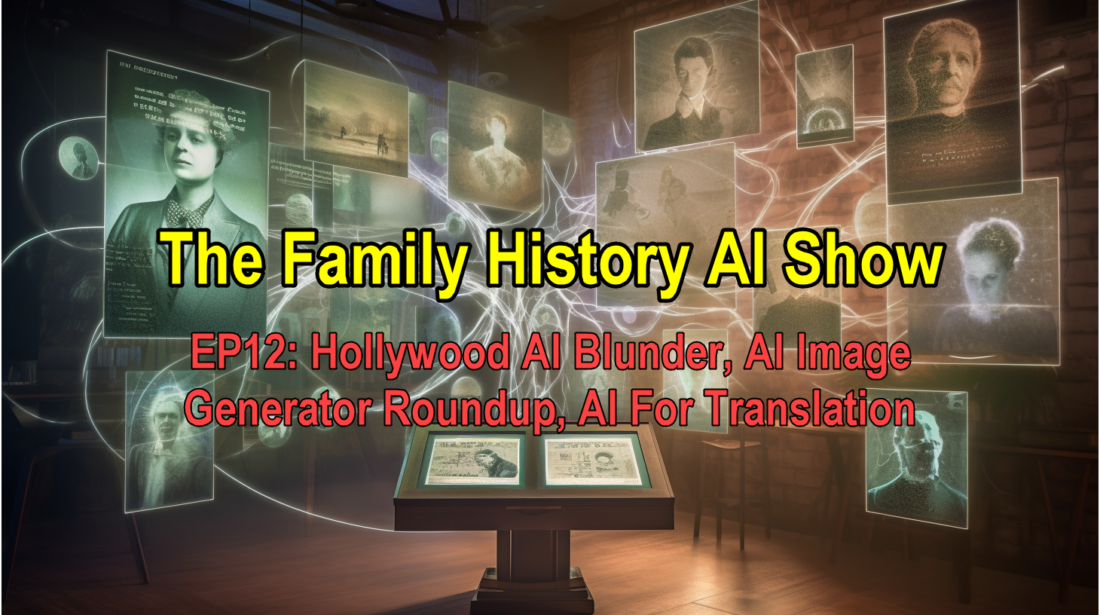
Episode 12: Hollywood AI Blunder, AI Image Generator Roundup, Google Lens Saves You Time Researching, Use AI For Translation

In this week’s episode of “The Family History AI Show,” my co-host Mark Thompson and I take you on an exhilarating journey through the latest AI advancements revolutionizing genealogy. We kick things off with a cautionary tale from Hollywood, highlighting the critical importance of fact-checking AI-generated content. Then, we dive deep into the world of AI image generators, exploring tools like DALL-E, Midjourney, and Adobe Firefly, and discussing their potential to breathe new life into family history narratives. We’re particularly excited to share our insights on the game-changing updates to Google Lens and its integration with Chrome, which we believe will transform how genealogists interact with online content. Our “Tip of the Week” focuses on the versatile applications of AI in translation, going far beyond simple language conversion. We wrap up with our “RapidFire” segment, covering everything from Microsoft’s new Tab Organizer to the future of AI agents in research. Whether you’re a tech enthusiast or just starting to explore AI’s role in genealogy, this episode is packed with practical advice and inspiring ideas to enhance your family history research. Join us for an hour of engaging discussion that will expand your horizons and revolutionize your approach to uncovering your family’s past.

https://blubrry.com/3738800/136034321/ep12-hollywood-ai-blunder-ai-image-generator-roundup-google-lens-saves-you-time-researching-use-ai-for-translation

Episode 11: Microsoft Simplifies Research with “Deep Search”, Google Goes All In on AI, Have We Entered the Post-Photography Era?

In this episode of “The Family History AI Show” podcast, hosts Mark Thompson and I discuss Microsoft’s new AI-enhanced search tool, Deep Search. Then, we review Google’s major list of AI announcements. In the last of the big stories this week, Mark and I talk about how photography is changing in the digital age.

Don’t miss this week’s Tip of the Week, where Mark provides valuable insights on crafting better prompts using the role-goal-task-format style.

The rapid-fire segment covers recent developments in AI image generation, including updates from OpenAI’s DALL-E and Midjourney. We also examine OpenAI’s safety measures and Elon Musk’s controversial AI tools.

Blending expert analysis and practical advice, this podcast equips listeners to navigate the exciting world of AI in genealogical research and beyond.

https://blubrry.com/3738800/135489123/ep-11-microsoft-simplifies-research-with-deep-search-google-goes-all-in-on-ai-have-we-entered-the-post-photography-era

Episode 8: Save Time by Summarizing, Meta’s Game-Changing AI Upgrade, FamilySearch’s Summarization Feature, Is the AI Bubble About to Burst?

Hello friends,

Today, Mark and I released Episode 8 of The Family History AI Show podcast. A description of the show is below. But I wanted to take a quick moment to point out how we have structured the show as a way to highlight what we enjoy sharing with you. The show has three parts: 1) In the News, 2) Tip of the Week, and 3) AI RapidFire. The “In the News” block is AI news that genealogists can use–today; these stories cover practical and actionable AI developments that family historians can put to use right now. For example, this week we cover a great summarization feature that FamilySearch quietly incorporated into their groundbreaking AI Labs “Full-Text Search” Experiment. Our middle block, “Tip of the Week,” is a teaching segment where we introduce, explain, and discuss both basic and advanced AI genealogy skills. This week we continue a series on the basics of building genealogy prompts, focusing on one of the fundamental strengths of language models, summarization. Our closing block, “AI RapidFire,” is a glimpse into the future, covering AI announcements, news, and demonstrations to keep an eye on, i.e., advances that–while perhaps not actionable today–seem likely to Mark and I to hold significant potential for the seasons ahead.

After our tenth episode, we’ll do some evaluation. We would love to hear your feedback. We’re having a blast doing the show, and we’d like to do better by listening to your reactions and suggestions.

Blessings, Steve

PS: PRO TIP: The AI skills we cover in each episode during the “Tip of the Week” segment are, as I like to say, eminently transferable. So regardless of whether you are a professional genealogist, serious enthusiast, or causal hobbyist, these techniques will find immediate usefulness in all your knowledge work. We hope that doctors, lawyers, butchers, bakers, candlestick makers, dentists, architects, and administrative assistants will be empowered to do good work with the lessons we offer here, both at the office and in the family history library, den, kitchen table, or spare room–wherever you do genealogy and other knowledge work.

The Family History AI Show podcast
EP8: Save Time by Summarizing, Meta’s Game-Changing AI Upgrade, FamilySearch’s Summarization Feature, Is the AI Bubble About to Burst?
July 31, 2024

In this week’s episode, hosts Mark Thompson and Steve Little explore Meta AI 3.1’s huge large language model upgrade, as well as FamilySearch’s innovative, AI-based summarization feature. They then address growing concerns about AI hype. In this week’s Tip of the Week, they share their approach for mastering the fine art of summarization, a crucial AI skill for genealogical research. The show rounds off with rapid-fire discussions of Google’s privacy policy update, Apple’s response to accusations made about their training data, and exciting developments in AI-powered education. Whether you’re a tech enthusiast or a family history buff, this episode offers invaluable insights into how AI is revolutionizing genealogy and beyond.

Timestamps:
In the News
01:01 Meta AI 3.1: A Huge Upgrade, and it’s Free!
13:09 FamilySearch’s New AI Summarization Feature
20:16 Addressing AI Hype Concerns

Tip of the Week
24:59 AI Building Blocks: Summarization

AI RapidFire
31:25 Google’s Privacy Policy Update
36:57 Apple’s Response to Training Data Accusations
40:02 Apple vs. Google: Platform Competition Heats Up
44:59 AI in Education: New Developments and Partnerships

https://blubrry.com/3738800/133566876/ep8-save-time-by-summarizing-metas-game-changing-ai-upgrade-familysearchs-summarization-feature-is-the-ai-bubble-about-to-burst